
Turnovers move fast. The old tenant is out, the new one has a date, and every day in between is a day with no rent. A good checklist keeps the handoff clean and the paperwork ready if anyone questions a charge. This is the list I run for landlords and property managers across Langley, Surrey, Cloverdale and Abbotsford.
The move-out condition inspection report comes first
In BC, the move-out inspection is the law. Section 35 of the Residential Tenancy Act says the landlord and tenant must inspect the unit before a new tenant moves in, on or after the day the old tenant leaves. The landlord must offer the tenant at least 2 chances to do it. The landlord fills in a condition inspection report, both sides sign it, and the tenant gets a copy.
The Residential Tenancy Branch has a template, the Condition Inspection Report (RTB-27), though landlords can use their own form. It sits beside the move-in report, so the two can be compared room by room. If the tenant does not show up for either offered time, the landlord can do the inspection alone.
Skipping this step costs money. Under section 36, a landlord who does not offer the 2 chances, or does not complete the report and give the tenant a copy, loses the right to claim against the deposit for damage. That is why I ask for the signed report before I price a turnover. It tells me which items are wear and tear on the landlord's side and which are damage the tenant may owe for. My guide to landlord vs tenant repair responsibilities covers where that line falls.
The tenant turnover checklist
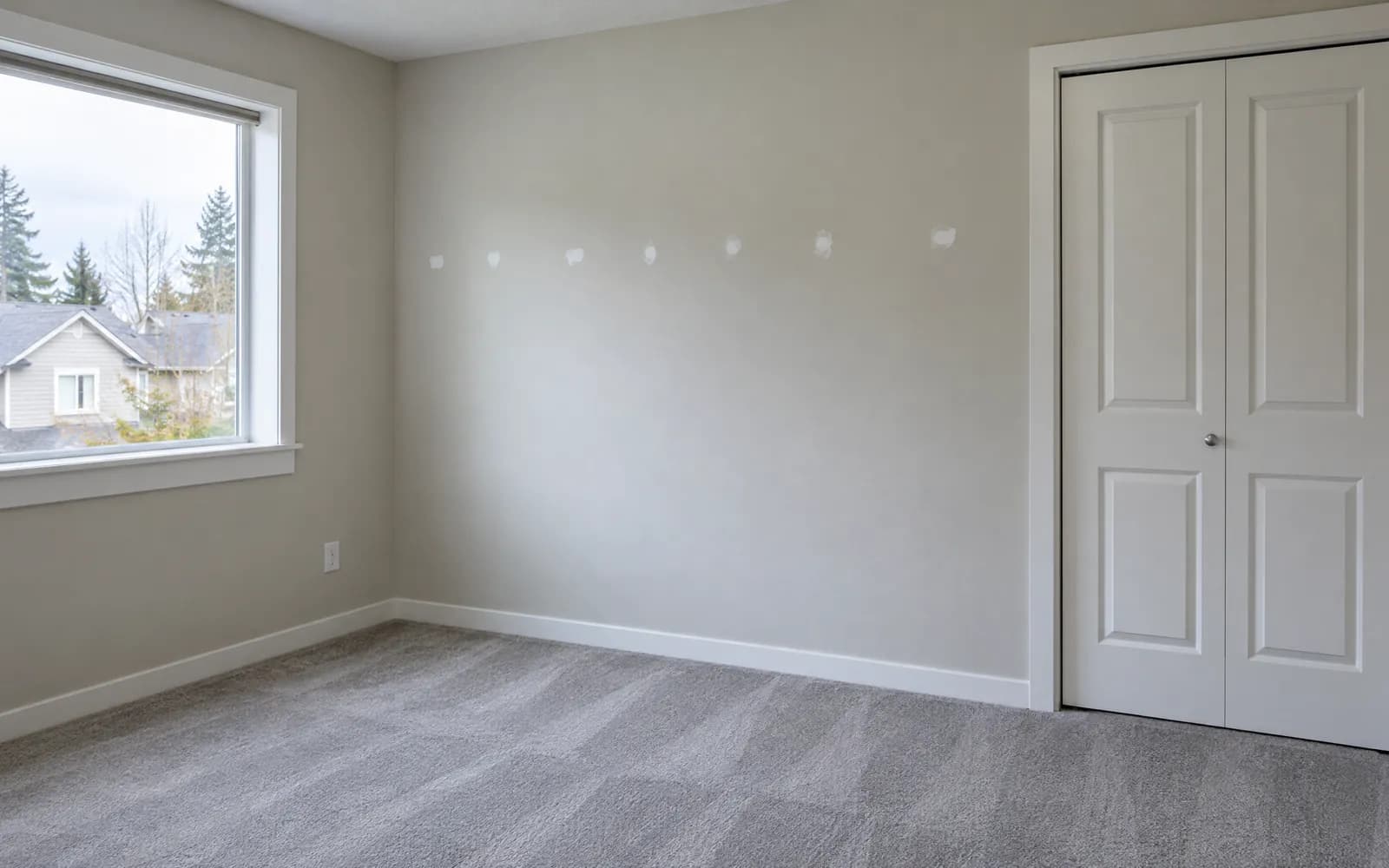
- Wall patches: anchor holes, dings, dents and scuffs, patched and touched up with paint
- Doors: hinges, latches, bumpers and handles adjusted or replaced
- Cabinets: hinges tightened or replaced, drawer slides fixed
- Caulk: tubs, showers, sinks, and baseboards where it has failed
- Faucets: cartridges, aerators and drain stoppers checked
- Toilets: tank parts, the seal at the base and the supply line
- Smoke alarms: tested, with new batteries, since the landlord must keep them working
- Light fixtures: bulbs, covers, switch plates and outlet covers
- Window blinds and locks: damaged ones replaced, loose ones secured
- Ground-floor units: fence and gate hinges and latches
Most of that list is home repairs in Surrey or home repairs in Langley, the same bundle of small fixes I do for homeowners. Units with a lot of wall damage lean toward drywall repair in Langley and a proper paint touch-up.
How a turnover runs from start to finish
Most turnovers follow the same order. The manager emails the scope with photos and access notes. I send back questions, then a written, itemized estimate. I schedule the work to the move-out date. I take before-and-after photos where the file needs proof. The itemized invoice goes out when the work is done.
My job is to make each of those steps boring and reliable. The manager's job is to send the scope clearly the first time. The quote form helps with that because it asks for the unit, the access rules and the photos up front. Sometimes I need to see the unit while the old tenant still lives there. Then section 29 of the Act applies. The landlord gives the tenant written notice at least 24 hours ahead, with a reasonable purpose and a time between 8 a.m. and 9 p.m.
Every job I take gets a written scope before I start, so the price is agreed in advance and the list stays the list.
Want me to take this one on? My page on home repairs covers what the visit includes, what I hand off, and how I price it.
What gets photographed
When a landlord needs proof, I take before-and-after photos tagged to the line items they back up. A patched wall gets a shot of the hole and a shot of the painted finish. A replaced blind gets the broken one and the new one. That record backs up the condition inspection report if the landlord makes a claim against the deposit.
What gets billed
- Labour itemized by category: walls, doors, plumbing, fixtures
- Materials listed with receipts, and the handling fee on its own line
- GST on its own line, with my registration number
- Photos referenced by line item
Itemized lines matter at move-out, because the landlord can match each repair to the move-out inspection report. I explain the full format in what a handyman invoice needs for strata and property accounting.
How long a turnover takes
I will not give you a standard number of days, because no two turnovers carry the same list. The time is set by a handful of things you can see in advance.
- The length of the list and how much of it is wall damage
- Drying time: filler has to dry before sanding, and paint needs time between coats
- Parts that have to be ordered, like a discontinued hinge, a blind size or a faucet cartridge
- Access rules: strata move-in hours, elevator bookings and key pickup
- Other trades in the sequence, such as an electrician, a plumber, flooring or cleaners
- When the move-out inspection is done, since I price from the signed report
Send me the list and the photos as early as you can, even before the tenant is out. Ordered parts and drying time are the two things that stretch a turnover, and both can start early.
Common turnover surprises
- Texture mismatches: ask up front whether the ceilings are knockdown or stipple
- Paint colour drift: keep the maker, colour and sheen on file for each unit
- Soft subfloor under a rocking toilet, more common in older units
- Wiring problems behind a wall, which go to a licensed electrician
If you run more than one building, the account side of this (one contact, a call when something is urgent, and invoices built to your accounting) is on my commercial handyman for property managers page.