
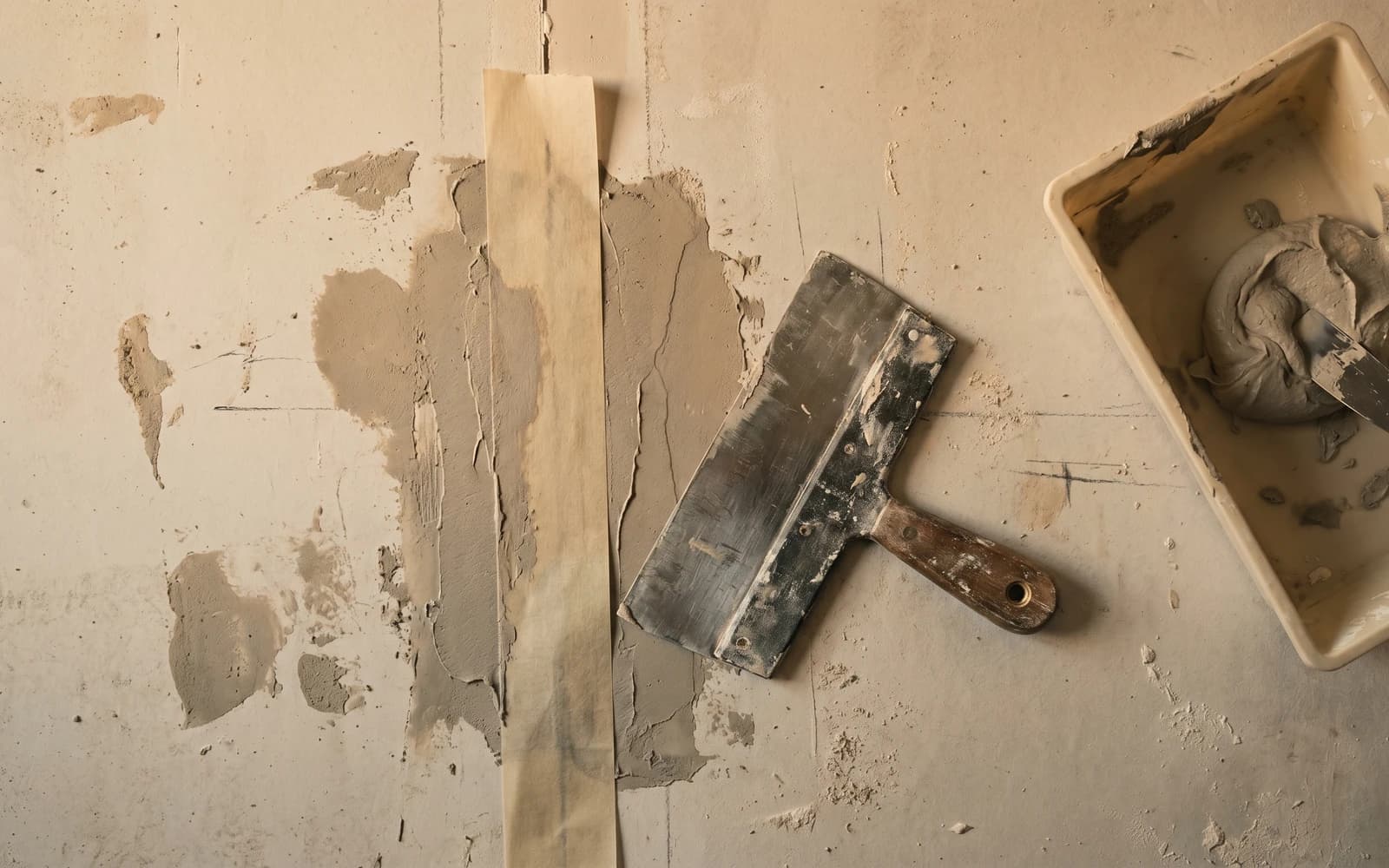
If you've Googled drywall repair cost in Langley you've seen wildly different answers. Pricing depends on a handful of specific variables, and the only honest way to get a real number is a written estimate after someone has seen photos. This guide explains what actually drives the cost so you can scope the conversation.
What drives drywall repair cost
- Size and number of patches (one small hole vs eight anchor holes)
- Whether the texture needs matching (knockdown is harder than smooth)
- Ceiling vs wall (ceilings are slower and harder)
- Access and prep (move furniture, dust control, paint after?)
- Number of coats, because rushed one-coat patches often show through paint later
- Whether paint matching is needed after the repair
- Timing pressure, especially selling, turnover, or access windows
Every job I take gets a written scope before I start, so the price is agreed in advance and the list stays the list.
Why one-coat patches often show later
A common shortcut is one coat of mud, a quick sand, then paint. It can look fine at first, then humidity, light, and surface movement reveal a halo around the patch. Layered compound, proper sanding, primer, and paint are what keep the repair from announcing itself later.
Texture matching: the make-or-break detail
Many older Langley homes have knockdown or stipple ceilings. Matching texture takes patience, testing, and the right method for the surface. I use spray-on knockdown for ceilings and sponge-stipple techniques for walls so the patch blends as closely as the existing finish allows.
How to get an accurate drywall quote
The single biggest variable in a drywall repair quote is what the surface looks like in person, which is why guesses given over text without photos almost always change once the visit happens. The four pieces of context that move a quote from a wide range to a specific number are scope (how many patches and how big), surface (smooth wall vs textured ceiling), paint matching (yes or no), and timing pressure (urgent or flexible). Anything else is detail.
- Take a few photos with a ruler or phone for scale on each patch
- Mention if paint matching is needed (and whether you have the original colour info)
- Mention any time pressure (selling, tenant turnover, before-photos deadline)
- Note the texture type if you know it (smooth, knockdown, stipple, popcorn)
