
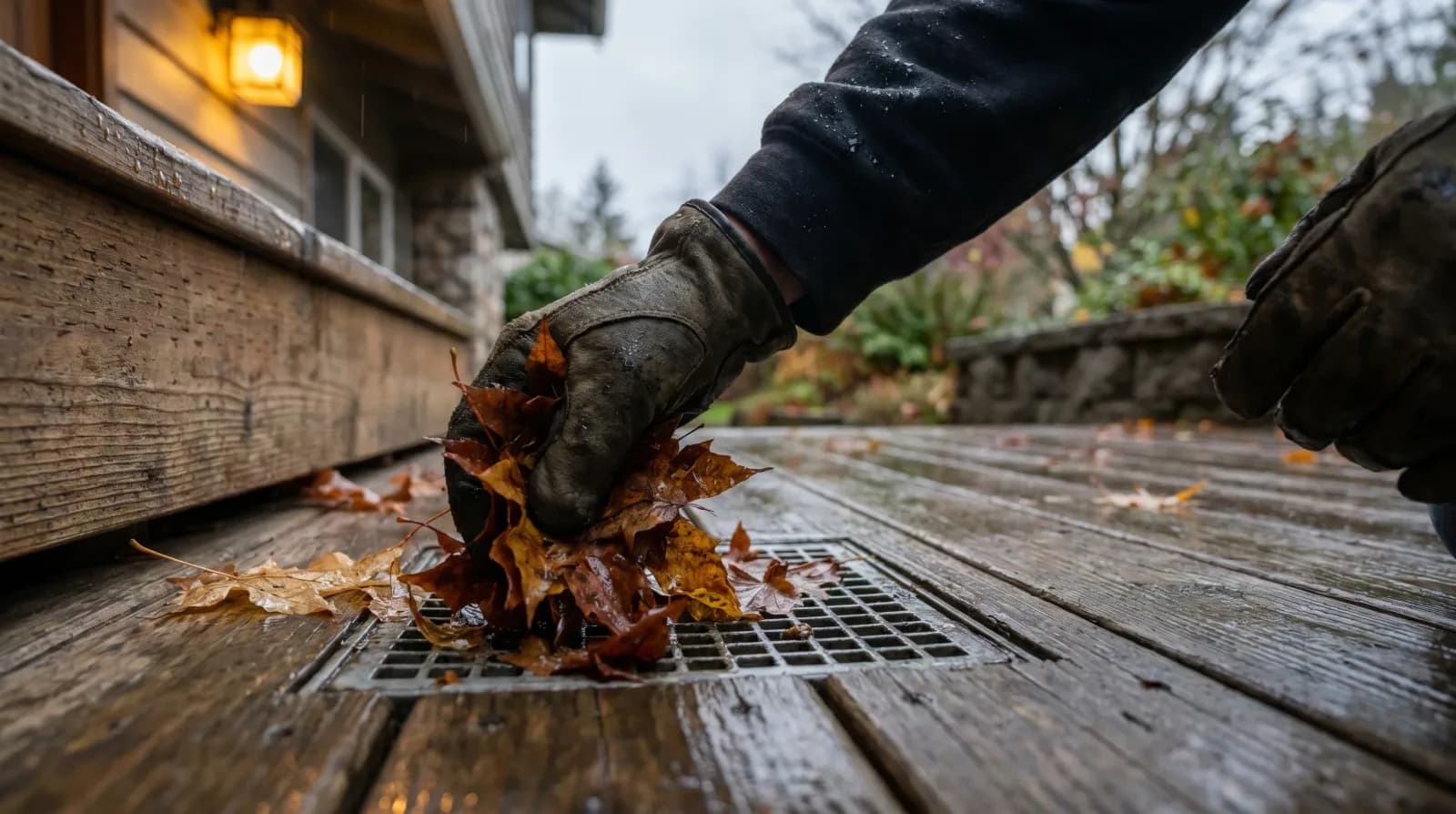
Lower Mainland weather has two seasons that matter for home maintenance: dry and wet. The dry season runs roughly May through August, the wet season is September through April, and the transition lands in mid-September with very little warning. Once the rain settles in, every problem in your house gets harder to diagnose, more expensive to fix, and more dangerous to ignore. The two-week window between Labour Day and the first atmospheric river is the most useful maintenance window in BC, and most homeowners miss it.
This checklist is built around what actually fails on Lower Mainland homes when fall rain hits. It is in priority order: do the structural-protection items first, then the comfort items. The repair half of it is standard general repairs work.
Phase 1: keep water on the outside (early September)
- Inspect all exterior caulk on trim, windows, and door frames. Re-caulk any joint that is cracked or pulling away. Failed caulk is the most common entry point for water in BC homes.
- Check weather stripping on every exterior door. If it is compressed, torn, or missing, replace it now while glue and caulk still cure quickly in dry weather.
- Walk the deck. Tighten any loose lag bolts or fasteners. Replace any board that is soft or rotted before winter freeze-thaw cycles widen the cracks.
- Walk the fence line. Reset any post that is leaning, replace any panel showing water damage, and re-stain or re-paint exposed wood before the rain settles in.
- Confirm the exterior tap shut-off valves work from inside. Drain the lines after the first close. A burst hose bib in February is one of the worst BC home problems.
- Trim back overhanging branches that touch the roof, the siding, or the gutters. Every leaf they drop ends up where it does not belong.
Phase 2: prep the interior for sealed-up months (mid September)
Once the rain forces you to close up the house, indoor air quality and comfort matter more. These are the small upgrades that change how the home feels through October to April.
- Replace the furnace filter. Then add 'replace furnace filter' to a calendar reminder for every three months.
- Reverse ceiling fan direction to clockwise. This pushes warm air down the walls instead of swirling it at the ceiling.
- Test every smoke detector and CO detector. Replace batteries on any unit older than a year. Replace the unit entirely on any over 10 years old.
- Check window locks and weather stripping from inside. A drafty window costs visible heating dollars over a BC winter.
- Caulk any baseboard or trim gap where you can see daylight or feel a draft.
- Check the attic insulation depth (R-50 minimum for BC code, more is better). If the previous owner cut corners, fall is when you would notice.
Phase 3: comfort and aesthetics (late September)
Once the structural and comfort work is done, the cosmetic round is what makes the house feel intentional through the dark months. None of these are urgent, but they all reward the homeowner who has the rest of the list under control.
- Touch up exterior paint on the front door and trim before the wet season makes it harder to cure.
- Pressure wash the deck, patio, and driveway one last time before fall debris arrives.
- Drain and store outdoor furniture cushions in a dry indoor space.
- Stage indoor lighting for the early-dark season. Add lamps in corners that go gloomy after 4pm in November.
- Tighten and clean every cabinet hinge and pull while you are doing the rest of the audit.
Every job I take gets a written scope before I start, so the price is agreed in advance and the list stays the list.
